| Month | Effective from the 1st | Effective from the 11th | Effective from the 21st |
|---|---|---|---|
| Aug 2026 | 3.25 % | 3.25 % | 3.25 % |
| Sep 2026 | 3.25 % | 3.25 % | 3.25 % |
| Oct 2026 | 4.00 % | 4.00 % | 4.00 % |
Energy surcharge
The energy surcharge is our response to primary and secondary effects of changing energy costs that are outside of our control. The percentage-based addition to the shipment price consists of a long-term and a short-term component. Both components are added together and applied as a percentage surcharge to the base price.
Energy surcharge = long-term component + short-term component
The long term component reflects long term trends in the energy market, while the short term component specifically addresses disruptive developments, such as the outbreak of crises or supply shortages impacting the transport market.
Long-term component
The long-term component is based on the current energy mix of an average shipment and considers the weighted values of relevant statistical indices for diesel, natural gas and electricity1.
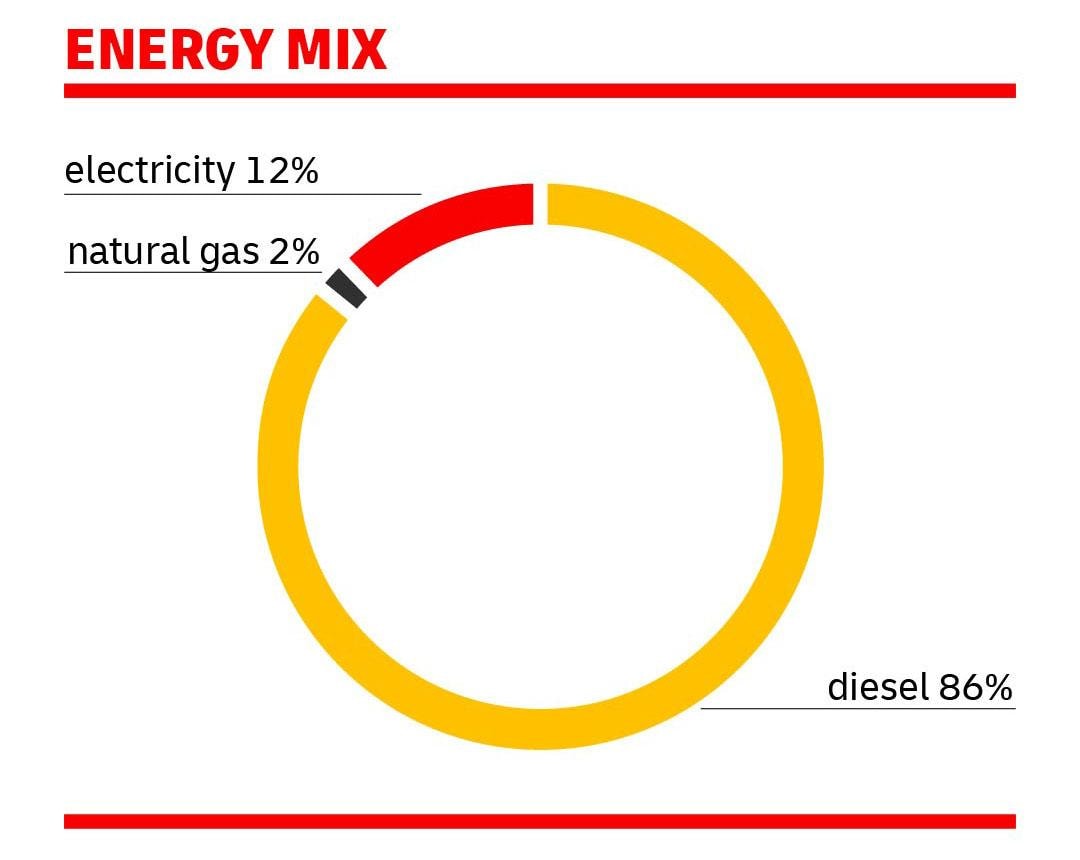
For years now, we have taken a range of steps to reduce the carbon emissions we generate. Today, for example, we now use gas-powered vehicles and over 38,500 electric vehicles in our delivery operations. We also intend to gradually reduce our reliance on fossil fuels in the coming years. More information about our path to zero emissions in Germany can be found here.
The basis for calculating the long-term component is the respective average index of the year 2025. The average surcharge value in the base year 2025 was 1.25 %.
The long-term component is adjusted once per month. The indices published as of the first day of the billing month are decisive for the calculation. Retroactive changes to the indices are not taken into account.
The exact threshold values and the applicable long-term components can be found in the table below.
| Index intervals | Long-term component | |
|---|---|---|
| from | to | |
| 75 | 0.00 % | |
| > 75 | 85 | 0.75 % |
| > 85 | 115 | 1.25 % |
| > 115 | 125 | 2.50 % |
| > 125 | 135 | 3.25 % |
| >135 | 145 | 4.00 % |
| for each additional 10 index points: + 0.75 % | ||
The current index value (August 2026) is 136.8. The long-term component of the energy surcharge for November 2026 is therefore 4.00 %.
| Month | Long-term component |
|---|---|
| September 2026 | 1.25 % |
| October 2026 | 3.25 % |
| November 2026 | 4.00 % |
Short-term component
The short-term component will apply for the first time as of June 1, 2026.
Current geopolitical events, in particular the war in Iran, are leading to significant disruptions in global energy and raw material markets and to strongly fluctuating oil prices, which have short-term effects on the transport market. While the existing energy surcharge primarily reflects long-term developments, the short-term component takes exceptional short-term market movements into account.
The maximum level of the short-term component is oriented towards the average price of Brent crude oil (North Sea) over the last 10 available trading days. The specific level is determined by DHL within the defined framework. Adjustments are possible on the 1st, 11th, and 21st of each month. The short-term component is charged in addition to the applicable long-term component of the energy surcharge.
Below an oil price level of EUR 70, only the long-term energy surcharge applies-the short-term component is 0% in this case. From an oil price level of EUR 70, the maximum value of the short-term component increases. At an oil price level of up to EUR 75, it rises to 1.5%. With each further increase in the average oil price by EUR 5, the maximum value increases by 0.5 percentage points, capped at a maximum of +3.0%.
| Average price of Brent crude Oil - Lower limit | Average price of Brent crude Oil - Upper limit | Maximum short-term component |
|---|---|---|
| <= EUR 70.00 | 0.0 % | |
| > EUR 70.00 | <= EUR 75.00 | Up to 1.5 % |
| > EUR 75.00 | <= EUR 80.00 | Up to 2.0 % |
| > EUR 80.00 | <= EUR 85.00 | Up to 2.5 % |
| > EUR 85.00 | Up to 3.0 % |
The current 10-day average (October 1 to October 14, 2026) of Brent crude (North Sea) is, for example, EUR 92.26. The short-term component of the energy surcharge therefore range between 0.0 % and 3.0 %.
As of October 21, 2026, the short-term component amounts to 0.75 %.
| Month | Short-term component effective from the 1st | Short-term component effective from the 11th | Short-term component effective from the 21st |
|---|---|---|---|
| Aug 2026 | 0.75 % | 0.75 % | 0.75 % |
| Sep 2026 | 2.00 % | 2.00 % | 2.00 % |
| Oct 2026 | 0.75 % | 0.75 % | 0.75 % |
Calculation of the energy surcharge
The surcharge is calculated as a percentage of the base price of your shipment and is commercially rounded to full euro cents.
Example
The average oil price of Brent crude (North Sea) over the last 10 available trading days is EUR 72. This would result in a maximum short-term component of 1.5%. Based on the current market situation, a short-term component of 0.5 % is applied. The long-term component is also 3.25 %.
Your parcel price is EUR 5.00. The long-term component of the energy surcharge amounts to 3.25 %, and the short-term component is 0.5 %. This results in a total energy surcharge of 3.75 %. Your parcel price including the energy surcharge therefore amounts to EUR 5.19.
1 The following indices are used: Producer price index for diesel for major consumers (20 26 005 2), Producer price index for natural gas for industry (3522 22) and Producer price index for electricity for customers with special agreements (3511 14/15).
The information published here is updated regularly. We reserve the right to adjust the reference values, the calculation basis, and the surcharge tables shown on a monthly basis with four weeks' notice; no separate prior announcement will be made.